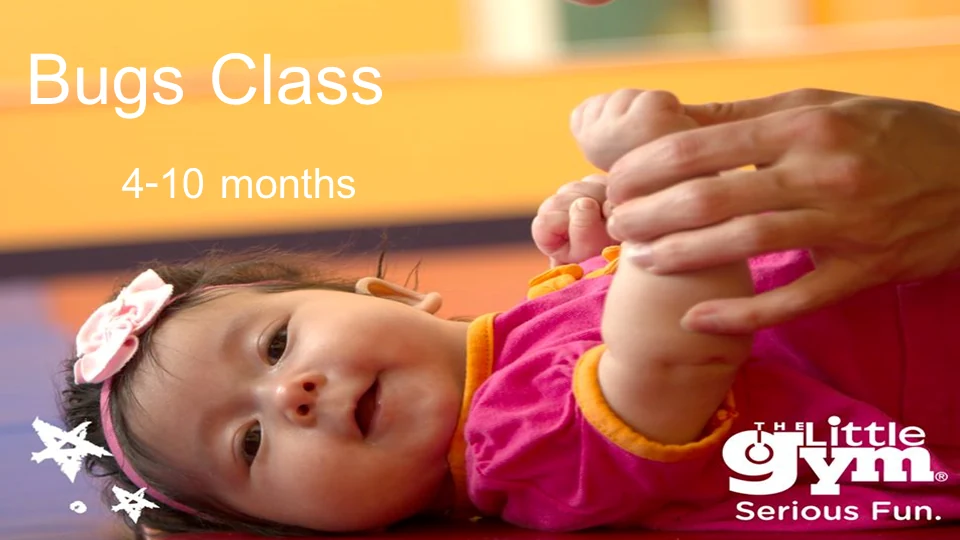
Bugs is a calm, sensory-rich introduction to movement. With a trusted adult close by, babies explore sound, touch, position and motion while building the strength that supports their next milestone.
How the class worksA parent or caregiver joins and learns alongside baby.
BU
Why this age matters
Creating the foundation of learning
During the first year, every purposeful movement gives the brain new information. Gentle work for the neck, shoulders, back and core helps babies organise their bodies for grasping, rolling, sitting and crawling—always at their own pace.
Body + brain together
The developmental focus for this age
The original program framework connects sensory processing, reflexes, language and motor development. The emphasis changes as children grow.
Hello Song — a calm, familiar rhythm that helps children settle into class
Name Song — every child is welcomed by name and introduced to the group
Perceptual Motor Song — moving body parts to music, such as Twinkle or Put Your Finger on Your Nose
Shoulder Girdle Exercise — gentle work for the head, shoulders, chest and back
✓What it develops
Language and early number concepts
Listening, anticipation and musical rhythm
Body awareness and a positive first social experience
Strengthens the upper body for head control, reaching and early floor movement
02
Warm-Up & Trunk
5 minutes
+Open details
→What children do
Sit Ups
Upside Down
Helicopter
Wheel Barrow
Fireman Carry
Forward Rolls
Sack of Potatoes
Donkey Kicks
Log Rolls
Backward Rolls
Flagpole
Finger Hang
Baby Trade
Rocking Chair
Back Whoop-Dee-Doo
✓What it develops
Builds trunk and core strength for sitting, standing and moving with control
Stimulates the vestibular and proprioceptive senses that support balance and body awareness
Develops locomotor, spatial-awareness and early tumbling skills
03
Arm & Shoulder Exercises
Part of this phase
+Open details
→What children do
Shoulder Stretch
Chest Stretch
Birdies
Windmills
Butterfly Stroke
Frog / Breaststroke
✓What it develops
Strengthens the chest and shoulders
Maintains flexibility through the elbows and shoulder joints
Strengthens the back for more stable posture
04
Leg & Yoga Exercises
5 minutes
+Open details
→What children do
Knee Bends
Alternating Knee Bends
Straddle Splits
Hamstring Stretches
Ankle Rotation
Dorsal Flexion of Foot
Cross Over
Plantar Flexion of Foot
Bow Pose
Tree Pose
Cobra Pose
Awkward Pose
Crocodile Pose
Downward Doggie Pose
✓What it develops
Strengthens the legs and hip joints
Maintains natural flexibility while baby is comfortable lying down
Creates a warm parent–child bonding routine
05
Group Activity
10 minutes
+Open details
→What children do
Parachute
Rhythm sticks
Stretch rope
Scarves
✓What it develops
Listening, rhythm and moving with music
Whole-body exercise, strength and movement development
Early social development through playing beside and with other children
Perceptual concepts such as high/low, under/over, right/left and through
06
Exploration
10 minutes
+Open details
→What children do
Walking and running pathways
Low balance beam
Bar activities — hanging and turning
Climbing
Rolling Hot Dog
Sitting in the donut
Balance Beam
Land Surfing
Donut Rides and Donut Walk
Hoop Walk
Hot Dog Walk
✓What it develops
Equipment is adapted to support crawling, sitting, standing and early walking
Safe discovery helps babies become more willing to try something new
Challenges strengthen the body and brain together
Vestibular and proprioceptive input supports more stable movement
07
Balls, Bubbles & Closing
10 minutes
+Open details
→What children do
Explore catching, weight and distance with balls
Track, reach for and catch bubbles
Return to the circle for a familiar goodbye
✓What it develops
Hand–eye coordination and visual tracking
Body awareness through reaching and changing position
A positive social ending for babies and caregivers
The original Bangkok program deck
See the complete class presentation
Move through the original slides to understand the developmental focus, weekly structure and activities parents and children experience during a normal class.
Use the arrows, thumbnails, or your keyboard to move through the deck.
BUBugs · 4–10 months
Slide 1 of 10
iThe slides are presented in their original form. Use the page language switch for the bilingual guide around them.
Age-right development
Milestones we support
Development is individual and rarely linear. These are common signs of growing confidence, not a checklist or promise.
◎
Milestones we support
✓Steady head and upper-body control
✓Reaching, grasping and bringing hands together
✓Rolling and changing position
✓Sitting with growing stability
✓Early preparation for crawling
↗
Skills children explore
✓Tummy-time variations
✓Supported rolling
✓Gentle swinging and rocking
✓Reaching across the body
✓Songs with touch and rhythm
✦
What parents may notice
✓More curiosity about new textures and positions
✓Stronger support through the neck, shoulders and core
✓Longer, happier floor-play time
✓More ideas for meaningful play together
See Serious Fun
See a Bugs class in action
A real Bangkok class clip gives you a feel for the pace, coaching and joyful atmosphere.
 Bangkok