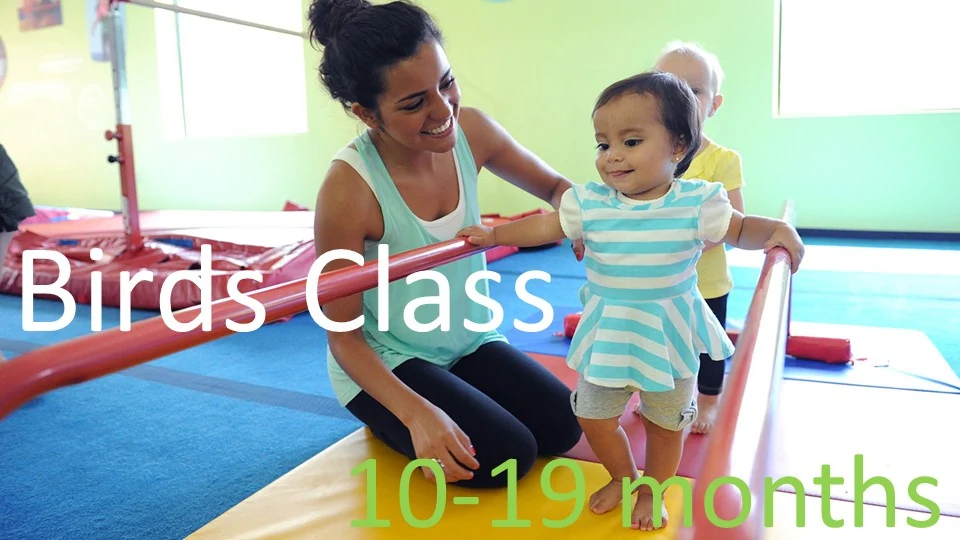
Birds is built for newly mobile children who are busy pulling up, cruising and walking. With a caregiver nearby, each adventure develops balance, coordination, communication and confidence in a safe group setting.
How the class worksA parent or caregiver joins as an encouraging role model.
BR
Why this age matters
Constructing the foundation of learning
As children become vertical, their view of the world changes quickly. Climbing, squatting, pushing and walking give the body and brain practice working together while simple choices and group routines build early independence.
Body + brain together
The developmental focus for this age
The original program framework connects sensory processing, reflexes, language and motor development. The emphasis changes as children grow.
Hello Song — a calm, familiar rhythm that helps children settle into class
Name Song — every child is welcomed by name and introduced to the group
Perceptual Motor Song — moving body parts to music, such as Twinkle or Put Your Finger on Your Nose
✓What it develops
Language and early number concepts
Listening, anticipation and musical rhythm
Body awareness and a positive first social experience
02
Warm-Up
5 minutes
+Open details
→What children do
Sit Ups
Upside Down
Helicopter
Wheel Barrow
Fireman Carry
Forward Rolls
Sack of Potatoes
Donkey Kicks
Log Rolls
Backward Rolls
Flagpole
Finger Hang
Baby Trade
Rocking Chair
Back Whoop-Dee-Doo
✓What it develops
Builds trunk and core strength for sitting, standing and moving with control
Stimulates the vestibular and proprioceptive senses that support balance and body awareness
Develops locomotor, spatial-awareness and early tumbling skills
03
Group Activity
10 minutes
+Open details
→What children do
Parachute
Rhythm sticks
Stretch rope
Scarves
Air mat
Hoops
Bean bags
✓What it develops
Listening, rhythm and moving with music
Whole-body exercise, strength and movement development
Early social development through playing beside and with other children
Perceptual concepts such as high/low, under/over, right/left and through
04
Exploration
15 minutes
+Open details
→What children do
Walking and running pathways
Low balance beam
Bar activities — hanging and turning
Climbing
Rolling Hot Dog
Sitting in the donut
Balance Beam
Land Surfing
Donut Rides and Donut Walk
Hoop Walk
Hot Dog Walk
✓What it develops
Fine- and gross-motor practice through climbing, balancing, walking and rolling
Age-adapted challenges make new experiences feel safer and more inviting
Supports more stable sitting, standing and walking
Stimulates vestibular and proprioceptive awareness
05
Ball Time
2 minutes
+Open details
→What children do
Throw, catch and pass balls using hands and feet
Follow simple directions and move to the musical rhythm
✓What it develops
Hand–foot and foot–eye coordination
Listening and responding to a cue
Early ideas of direction, force and distance
06
Bubbles
2 minutes
+Open details
→What children do
Track floating bubbles with the eyes
Walk or crawl to reach, touch and catch them
✓What it develops
Improves visual tracking
Develops hand–eye coordination
Promotes body awareness and motor perception
07
Closing
1 minutes
+Open details
→What children do
Return to the group for a short, predictable goodbye
✓What it develops
Helps children transition calmly out of class
The original Bangkok program deck
See the complete class presentation
Move through the original slides to understand the developmental focus, weekly structure and activities parents and children experience during a normal class.
Use the arrows, thumbnails, or your keyboard to move through the deck.
BRBirds · 10–19 months
Slide 1 of 9
iThe slides are presented in their original form. Use the page language switch for the bilingual guide around them.
Age-right development
Milestones we support
Development is individual and rarely linear. These are common signs of growing confidence, not a checklist or promise.
◎
Milestones we support
✓Pulling to stand and lowering with control
✓Cruising along a stable surface
✓Independent steps and direction changes
✓Squatting to collect an object
✓Imitating a simple movement or sound
↗
Skills children explore
✓Low-beam walking with support
✓Climbing over soft shapes
✓Pushing and pulling
✓Supported hanging
✓Stop-and-go movement games
✦
What parents may notice
✓More stable standing and walking
✓Greater willingness to explore away from a caregiver
✓Better response to simple words and gestures
✓Growing interest in other children
See Serious Fun
See a Birds class in action
A real Bangkok class clip gives you a feel for the pace, coaching and joyful atmosphere.
 Bangkok